Inspired by Pelvic Floor First
I attended the launch of the Pelvic Floor First campaign that was presented by the Continence Foundation of Victoria in November 2011. As a Women’s Health, and Musculoskeletal Physiotherapist I was delighted with the name of Pelvic Floor First. Inspired with the presentation I woke in the early hours writing a practical educational workshop called PELVIC FLOOR FITNESS targeting the Fitness Industry on the importance of the functional application of the pelvic floor muscles.
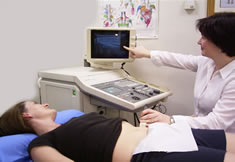
In clinical practice using the Real Time Ultrasound for biofeedback I became aware that women’s pelvic floor muscles were not being acknowledged and recruited with exercise. Observations using the real time ultrasound revealed that women were not recruiting the pelvic floor muscles instead were pushing down upon the pelvic floor risking pelvic organ prolapse.
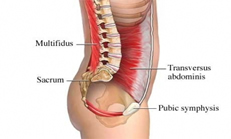
Women were trying hard to improve their physical fitness, placing great trust in their personal trainers and fitness instructors. However, were saddened to hear they were not being properly guided on how to best recruit their pelvic floor muscles for exercise. I became aware of the gap in knowledge regarding the correct recruitment of the “core” of which the pelvic floor muscles are an essential component.
Pelvic Floor First was a brilliant choice to encourage the pelvic floor muscles to be well elevated in the pelvic cavity to counteract the inevitable increase in intra-abdominal pressure in fitness based exercise.
This repetition of intra-abdominal pressure and constant loading of an unrecruited pelvic floor has the negative consequence of pelvic organ prolapse and/or stress urinary incontinence.
Mandy’s Story
Mandy (fictitious name) returned to her local gym 8 months after the birth of her third child. After 3 months of enjoying multi weekly gym visits Mandy presented frustrated that she still looked 6 months pregnant. Mandy experienced mild stress urinary incontinence and abdominal discomfort with exercise.
Mandy’s typical abdominal routine included sit ups which she enjoyed doing. Mandy performed these sit ups with her abdomen swelling outwards and on real time ultrasound observation her bladder descended downwards into her vagina.
Mandy was horrified that she had been working out for the past 3 months potentially developing a prolapse and worsening her stress urinary incontinence. She was upset that the fitness instructors had not corrected her poor technique and wondered why her pelvic floor muscles were not discussed considering she was recovering from the birth of her third child.
Mandy was then taught, in physiotherapy, how to correctly recruit her pelvic floor muscles and perform an appropriate and safe partial sit-up. When viewing on real time ultrasound, whilst doing this exercise, Mandy maintained an elevated pelvic floor with no downward movement of her bladder.
Mandy left with the motto “Pelvic Floor First” before exercise.